
CameroonOnline.ORG | Cameroon has entered another period of political uncertainty following a major reshuffle of its military leadership while President Paul Biya remains outside the country.
The appointments, announced by presidential decree, affect some of the country’s highest-ranking military positions. Although changes within the armed forces are not uncommon, the timing has attracted considerable attention because they come during President Biya’s prolonged absence from Cameroon.
A Significant Moment
At 93 years old, Paul Biya has led Cameroon since 1982, making him one of the world’s longest-serving heads of state. His extended stay abroad has fueled speculation about the country’s political future, succession planning, and the continuity of government. While officials insist that the president continues to exercise his constitutional powers and that there is no vacancy in the presidency, the absence has intensified public debate.
Against this backdrop, the decision to reorganize the military hierarchy carries added political significance. The armed forces have historically played a central role in maintaining stability in Cameroon, particularly as the country continues to confront security challenges ranging from the Boko Haram insurgency in the Far North to the ongoing separatist conflict in the Anglophone regions.
Why Military Appointments Matter
In many African states, senior military appointments are closely watched because they often reflect a president’s priorities and confidence in key commanders. They may be intended to improve operational effectiveness, prepare for future security challenges, or reinforce institutional loyalty during periods of political uncertainty.
The latest reshuffle does not necessarily indicate an impending political transition. However, it reinforces the perception that the government is taking steps to ensure continuity within one of the country’s most important institutions while the president remains abroad.
Who Was Appointed?
The reshuffle extended well beyond routine promotions and touched some of the most sensitive positions in Cameroon’s security establishment.
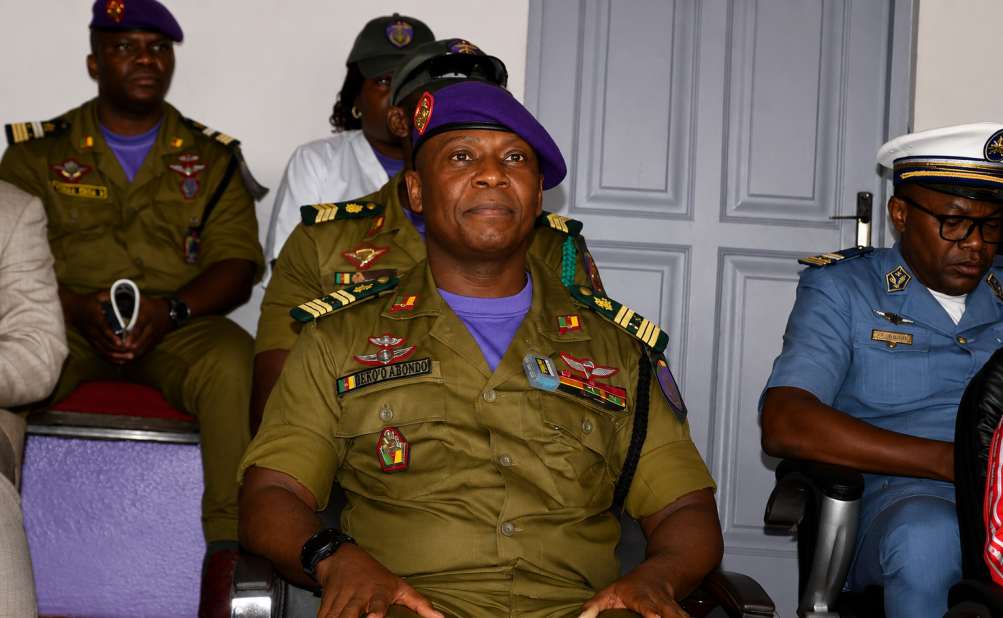
The most notable appointment is the promotion of Raymond Jean Charles Beko’o Abondo to brigadier general, and he maintains him in command of the presidential guard, a position he has held for 13 years already. The Presidential Guard is an elite unit responsible for protecting President Paul Biya, the presidency, and other strategic institutions. Because of its proximity to the head of state, the command is widely regarded as one of the most influential positions within the Cameroonian military.
Another significant change saw Major General Ebaka Hippolyte appointed Major General of the Armed Forces General Staff, effectively becoming the senior operational officer responsible for coordinating the military’s day-to-day activities under the Chief of Defence Staff. This position plays a central role in planning operations and ensuring coordination among the army, navy, air force, and gendarmerie.
The decrees also replaced the commanders of Cameroon’s four Joint Military Regions, the territorial commands responsible for overseeing military operations across the country. These regional commanders supervise security operations in areas facing diverse threats, including Boko Haram attacks in the Far North, separatist violence in the Anglophone Northwest and Southwest regions, and border security challenges.
In addition to these command changes, President Biya promoted five colonels to the rank of Brigadier General:
- Eloundou E. Mesmin Magloire Aristide (National Gendarmerie)
- Beko’o Abondo Raymond Jean Charles (Army)
- Nchankou Mbouombouo Njindam Oumar (Army)
- Epie Ngome Wilson (Army)
- Mezui Zo’o Elie Romance (Army)
The promotions elevate a new generation of senior officers into positions from which they could shape Cameroon’s security policy for years to come.
More Than Routine Personnel Changes
Although governments regularly rotate military commanders, analysts note that this reshuffle carries unusual political weight. It comes as President Biya remains outside Cameroon and only weeks after he reaffirmed his intention to seek another presidential term. In that context, strengthening the military command structure—and particularly appointing a new commander of the Presidential Guard—has inevitably fueled speculation about succession planning, regime stability, and the government’s efforts to ensure continuity during a politically sensitive period.
Succession Questions Remain
For years, analysts have debated what a post-Biya Cameroon might look like. Despite repeated discussions about succession, no clear political roadmap has emerged. Recent constitutional changes and persistent rumors surrounding the president’s health have only heightened public interest in how power would be transferred should circumstances require it.
Government officials continue to reject suggestions that there is a constitutional crisis, maintaining that President Biya remains fully in charge despite his absence. Nevertheless, prolonged uncertainty naturally invites increased scrutiny from opposition parties, civil society, and international observers.
Looking Ahead
The military reshuffle serves as a reminder that political stability in Cameroon remains closely linked to the country’s long-serving president. Whether these appointments are simply routine administrative decisions or part of broader preparations for an uncertain future remains unclear.
For now, the government projects continuity and stability. Yet the combination of an absent president, renewed succession debates, and changes at the top of the military ensures that Cameroon will remain under close observation in the weeks ahead.
As events continue to unfold, the key questions remain unchanged: How long will President Biya remain outside the country? What role will the newly appointed military leadership play? And what does this latest reshuffle reveal about the future direction of one of Central Africa’s most influential states?