
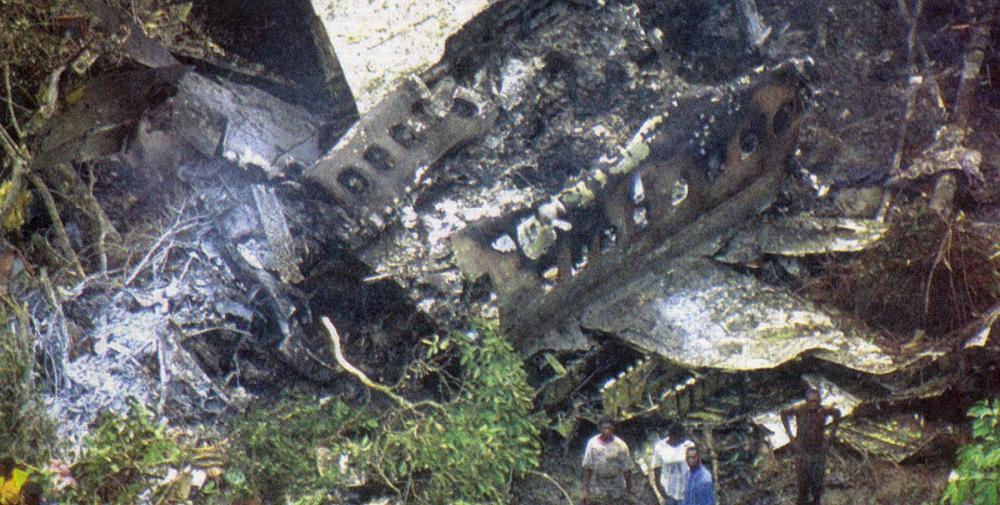
CameroonOnline.ORG | Nearly thirty years after a fatal crash in Central Africa, an extraordinary legal battle has erupted in a Seattle federal court. Boeing has filed a lawsuit against the estate of the defunct carrier Cameroon Airlines, aiming to block a $179 million claim stemming from a 1995 disaster.
Here is a breakdown of how a decades-old tragedy resurfaced in federal court, what Boeing’s purchase contracts reveal, and why this lawsuit matters for aviation law.
1. The 1995 Tragedy in Douala
On December 3, 1995, Cameroon Airlines Flight 370—a Boeing 737-200 delivered to the carrier in 1985—crashed while attempting a go-around maneuver during landing at Douala International Airport. Tragically, 71 of the 76 passengers and crew on board lost their lives.
An official investigation led by the Cameroonian government in 1996 concluded that:
-
The primary cause was a loss of control following the failure of an engine fan blade during the aborted landing.
-
The failed fan blade had been installed in 1993 by Sabena, a third-party maintenance contractor, years after Boeing delivered the plane.
-
The investigation cleared Boeing of fault, finding no evidence that the aircraft’s design, manufacturing, operational manuals, or Boeing-provided training contributed to the crash.
2. The Liquidator’s $179 Million Demand
Cameroon Airlines went into liquidation in the late 2000s. However, in late 2024, court-appointed liquidators representing the airline’s estate filed a surprise lawsuit against Boeing and engine manufacturer Pratt & Whitney in Douala.
The estate is seeking 103.1 billion FCFA (roughly $179 million), breakdown as follows:
-
$40 million for a replacement aircraft
-
$130 million for past operating losses
-
$8.7 million for reputational damage
The estate contends that Boeing failed to install adequate engine failure alert systems and lacked proper single-engine go-around training programs.
3. Boeing’s Legal Counterstrike in Seattle
Boeing’s response in the U.S. District Court for the Western District of Washington relies on contract law:
-
Liability Waivers: Boeing states the original 1984 sales agreement included broad liability releases for aircraft defects and manuals beyond standard express warranties—all of which expired long before 1995.
-
Indemnification Clause: The purchase contract included terms covering post-delivery services (such as flight training) requiring Cameroon Airlines to defend Boeing against third-party actions, cover legal expenses, and pay any resulting judgments.
-
Jurisdiction: Boeing points out that because the aircraft was manufactured, sold, and delivered in Washington state, Washington law governs the contract.
Boeing is asking the U.S. federal court for a declaratory judgment declaring the claims barred, alongside damages for breach of contract and full reimbursement of legal defense fees.
Key Takeaways
Why this matters: This case highlights how original equipment manufacturer (OEM) sales contracts are structured to protect aircraft builders decades after initial delivery. By leveraging strict liability waivers and indemnity provisions, manufacturers can shield themselves when maintenance or operational failures occur long after transfer of ownership.