
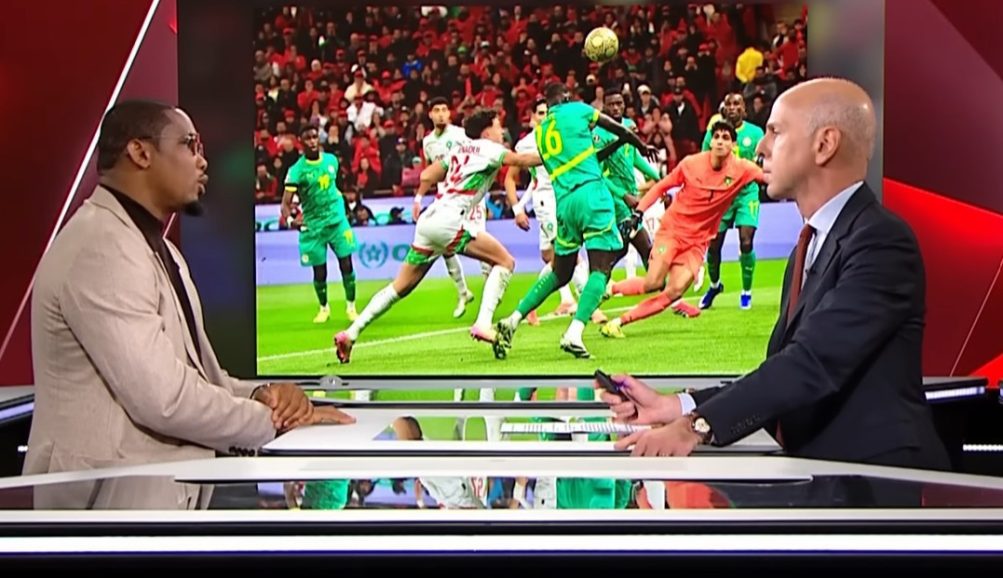
Analysis of a wide-ranging interview on France 24
CameroonOnline.ORG | Speaking on the program En tête à tête on France 24, Samuel Eto’o, president of the Cameroonian Football Federation, reflected at length on an Africa Cup of Nations that was as dramatic as it was controversial. From the chaotic final between Senegal and Morocco to governance tensions within Cameroonian football, the former striker delivered a message combining restraint, firmness, and carefully measured ambition.
A Historic Final Overshadowed by Controversial Decisions
Samuel Eto’o opened by unambiguously congratulating Senegal on a victory he described as deserved, praising both the players and their supporters for the collective strength and determination shown throughout the tournament.
However, the tone quickly shifted toward concern. The final, marked by a disallowed goal, a controversial penalty, a temporary walk-off by Senegalese players, and disorder in the stands, left what Eto’o described as a lasting imprint on the competition. While he rejected the idea that the celebration itself had been spoiled, he acknowledged that many of these incidents could have been avoided.
He emphasized that the tournament’s logistical organization had reached a high standard and publicly praised Morocco’s efforts. Yet he insisted that refereeing controversies should never dominate the narrative of African football’s flagship competition.
Refereeing, VAR, and a Climate of Distrust
Without directly accusing referees of bias, Eto’o described an environment that fostered suspicion well before kickoff. Late notification of match officials, lack of opportunity to contest referee appointments, and logistical irregularities all contributed, in his view, to a perception of unfairness.
Central to his argument was the inconsistent use of VAR. Eto’o maintained that consulting video review in decisive moments would help contain emotions and restore confidence. He stressed that a single red card or penalty decision can completely alter the course of a match, regardless of overall attacking statistics.
Leadership Under Pressure: The Case of Sadio Mané
Asked about Senegal’s temporary withdrawal from the pitch during the final, Eto’o adopted a notably understanding stance. Drawing from personal experience, he explained how emotional intensity can override rational judgment in critical moments.
Rather than condemning the Senegalese coaching staff, he praised their willingness to defend their players. He reserved particular admiration for Sadio Mané, whom he described as one of Africa’s greatest champions. According to Eto’o, Mané’s intervention to bring his teammates back onto the field represented exceptional leadership and preserved both Senegal’s chances and its reputation.
CAF Sanction and a Disputed Verdict
The interview then turned to the disciplinary sanctions imposed on Eto’o by the Confédération africaine de football, including a stadium ban and a fine for alleged unsporting conduct.
Eto’o firmly rejected the ruling and confirmed that he had filed an appeal. He stated that an executive committee witness testified that his actions were aimed solely at denouncing refereeing decisions, not disrupting the match. In his view, defending fair play sometimes requires confronting uncomfortable realities.
Cameroon’s Campaign and the Case for Stability
On the pitch, Eto’o strongly defended Cameroon’s quarterfinal finish. He argued that the result should be considered a success, given that more than two-thirds of the squad lacked prior tournament experience. Beyond results, he highlighted what he described as the return of a fighting mentality long associated with Cameroonian football.
He also confirmed the federation’s commitment to continuity, announcing that the current head coach would remain in place through the next AFCON cycle to ensure stability and calm.
Federation, Ministry, and Institutional Boundaries
One of the most sensitive topics involved the former national team coach appointed by the Ministry of Sports, who was dismissed but continues to receive salary payments. Eto’o distanced the federation from the issue, stating that the coach was not his employee and that payment decisions rested with the state.
Regarding the Minister of Sports, Eto’o maintained a respectful but firm tone. While acknowledging disagreements, he emphasized that such conflicts should be addressed through appropriate institutional channels rather than public confrontation.
Power, Politics, and Personal Ambitions
Questioned about his relationship with President Paul Biya and speculation surrounding political succession, Eto’o remained cautious. He declined to comment on national leadership matters, insisting that his responsibility lay in football governance and national development within his mandate.
As for his own future, Eto’o dismissed widespread speculation about ambitions within CAF, FIFA, or Cameroonian politics. His stated priority, he said, was to improve the living conditions of Cameroonian footballers, particularly those playing domestically, and to leave behind tangible reforms rather than personal advancement.
A Delicate Balancing Act
The interview portrays a Samuel Eto’o in transition: still passionate and combative, yet increasingly aware of the institutional and political constraints surrounding African football. Positioned between reformist rhetoric and diplomatic caution, he appears less a former superstar than a central figure in continental football governance.
Whether this posture will lead to lasting reform or merely contain future crises remains uncertain. What is clear is that unless structural issues are addressed, controversial decisions risk continuing to overshadow the game itself.