
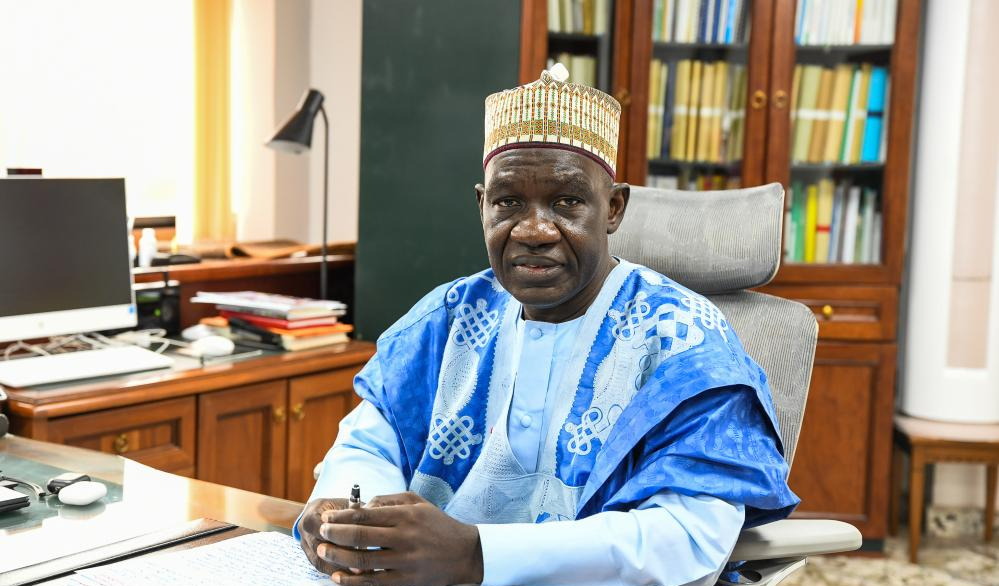
CameroonOnline.ORG | Cameroon is looking to strengthen its long-standing economic partnership with China, according to a recent interview given by Cameroonian Minister of Economy, Planning and Regional Development Alamine Ousmane Mey to Xinhua News Agency. The interview, published by Xinhua on May 8, 2026, highlights Cameroon’s view of China as a reliable strategic partner in trade, infrastructure, financing, and broader economic development.
The timing of the interview is significant. The year 2026 marks the 55th anniversary of diplomatic relations between Cameroon and China. Minister Ousmane Mey described the relationship as one built over more than half a century, grounded in friendship, shared values, and long-term cooperation. He emphasized that China has become Cameroon’s leading bilateral partner in both trade and financing.
A major focus of the partnership has been infrastructure. According to the minister, Chinese cooperation has contributed to the development of ports, roads, energy systems, sports facilities, and drinking water supply in Cameroon. One major example he highlighted is the deep-water port of Kribi, which Cameroon sees as a logistics hub not only for the country but also for the wider Central African sub-region.
The minister also expressed interest in expanding cooperation through stronger private-sector participation. He pointed to public-private partnerships and the involvement of small and medium-sized enterprises as important ways to deepen infrastructure development while also promoting skills transfer and local economic growth.
Another important topic was China’s zero-tariff policy, which took effect on May 1, 2026, for 53 African countries that maintain diplomatic relations with Beijing. Ousmane Mey called the policy a “historic decision,” saying it could improve the competitiveness of Cameroonian products in the Chinese market. He specifically mentioned opportunities for Cameroonian farmers and producers in sectors such as cocoa, coffee, cotton, and other agricultural products.
Beyond tariffs, the minister pointed to trade platforms such as the China-Africa Economic and Trade Expo, the Canton Fair, and the China International Import Expo as important channels for Cameroon to promote its products, attract investment, and deepen economic ties with Chinese public and private partners.
The interview also placed Cameroon-China relations within a broader global context. Ousmane Mey described China as an important strategic partner for African countries, especially at a time when global markets face volatility and rising protectionism. He argued that China and countries of the Global South can help advocate for fairer global trade rules and more inclusive multilateralism.
Overall, the interview presents Cameroon’s relationship with China as more than a traditional diplomatic partnership. It reflects Cameroon’s hope to use Chinese cooperation to support infrastructure, industrialization, agricultural exports, private-sector development, and broader economic modernization. As both countries mark 55 years of diplomatic ties, the message from Yaounde is clear: Cameroon wants to build on the foundation already established and move toward even stronger trade and economic cooperation with China.