
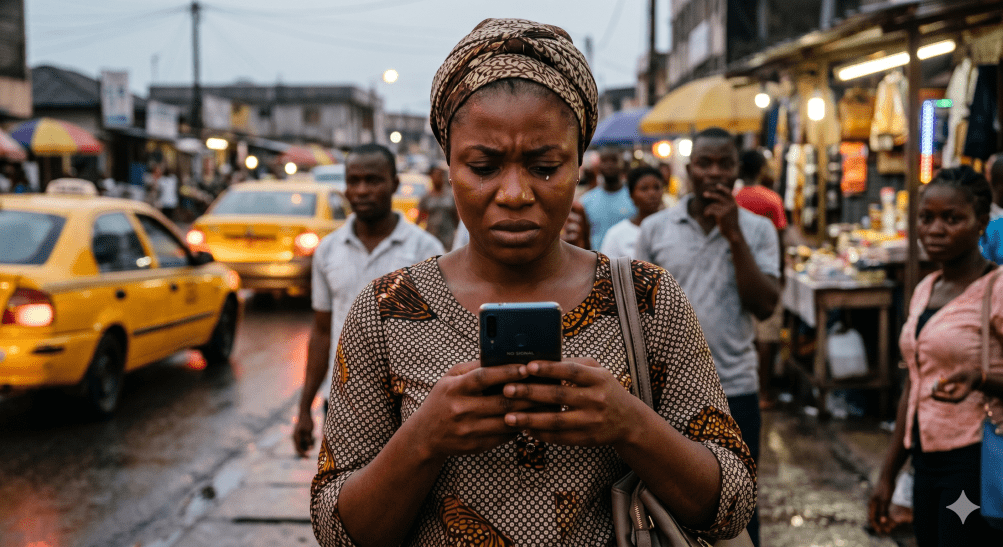
CameroonOnline.ORG | Imagine waking up on a Monday morning, grabbing your smartphone to check your messages, and finding out your device has been entirely barred from the network. No signal, no data, no cellular connection.
This is the looming reality for an estimated 700,000 mobile phone and tablet users in Cameroon.
Fongod Edwin Nuvaga, the Director General of Customs, has issued a final directive to the country’s telecom giants (Camtel, MTN Cameroon, and Orange Cameroon). The order is simple yet drastic: disconnect and blacklist all unregistered digital devices by Monday, May 25, 2026.
Here is what is happening, why the government is pulling the plug, and what affected consumers need to do to get back online.
Moving the Border to the Server Room
For years, Cameroon has struggled with a massive “grey market” for electronics. An estimated 4 million devices enter the country annually, yet customs revenue from electronics plummeted from 12 billion FCFA in the early 2000s to a meager 100 million FCFA per month recently. High-end smartphones were routinely smuggled across borders or brought in via “suitcase imports” by travelers and informal traders who bypassed customs entirely.
Previous enforcement attempts in 2020—which tried to deduct taxes directly from consumer airtime credit—faced immense public backlash and were abandoned.
This time, the government is trying a different tactic. Instead of chasing smugglers at physical borders or airport terminals, the digital checkpoint has moved directly into the server rooms of the telecom providers.
Under the new CAMCIS (Cameroon Customs Information System) platform, enforcement relies on a device’s unique 15-digit IMEI (International Mobile Equipment Identity) number:
The “Handshake” Protocol: When a new SIM card is inserted into an imported device, it attempts to connect to a local cell tower. The telecom network instantly queries the customs database. If the IMEI has no record of customs clearance, it is flagged for restriction.
Under Article 7 of the joint decision, telecom operators are now legally liable. If a carrier allows an uncleared phone to use its network, the carrier becomes responsible for paying the missing tax. With their own bottom lines on the line, the telcos have no choice but to enforce the blackout.
The Financial Stakes: A 25 Billion FCFA Goal
This crackdown isn’t a new tax; rather, it’s an automated enforcement of Article 6 of the 2023 Finance Law, which mandates a 33.3% customs duty on all imported digital terminals.
By automating the collections process, the Ministry of Finance aims to recover 25 billion FCFA ($40 million USD) annually to fund national budgets. While grandfathered devices (phones already active in Cameroon before April 1, 2026) and tourists using international roaming are safe under a “fiscal amnesty,” any phone brought in and sold informally after that date is fair game.
The Consumer’s Dilemma: How to Regularize Your Phone
If your device is blocked on Monday, the restriction is tied to the physical phone itself, not your SIM card. Moving your SIM to another unregistered phone won’t work.
To restore service, users must manually clear their devices through the government’s online MPIE (Mobile Phone Identification and Enforcement) portal.
The Regularization Process
What This Means for the Future
While the reform is successfully boosting state revenues—reportedly pulling in over 200 million FCFA in a single week earlier this month—it does pose a challenge for everyday consumers. Local electronic vendors have warned that absorbing or passing down a 33.3% tariff will inevitably spike the retail cost of smartphones in Cameroon.
For now, the era of turning a blind eye to smuggled “suitcase electronics” is officially over. If you bought a new device recently, it is highly recommended to check its customs status before the Monday morning deadline hits.