
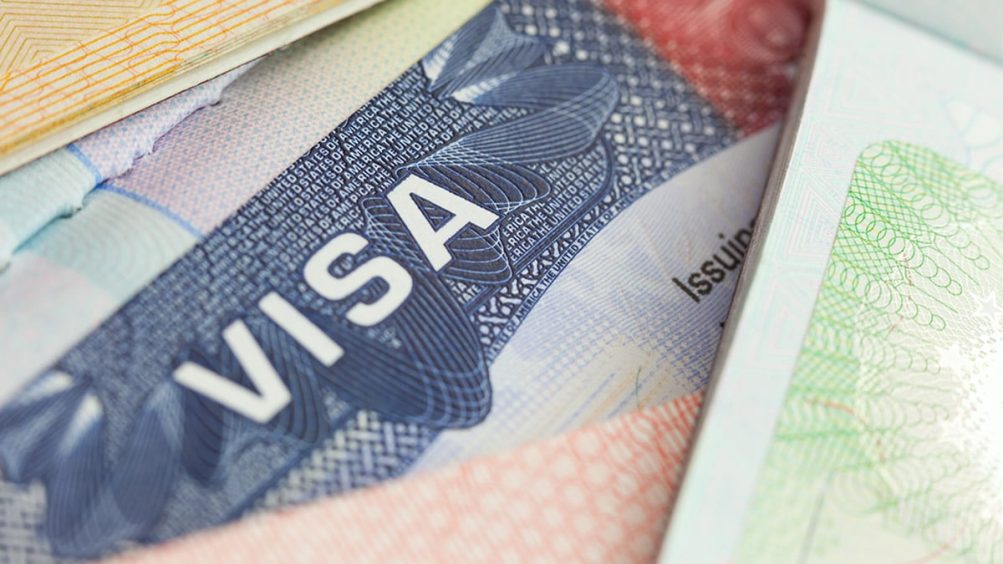
CameroonOnline.ORG | The U.S. State Department is transitioning its pilot visa bond requirement into a permanent policy. The regulation requires select international travelers applying for business and tourist visas (B1/B2) to post financial bonds before setting foot on American soil.
Mainly affecting citizens from 50 countries—the vast majority in Africa—the updated rule raises the maximum bond amount to $20,000 and eliminates the previous $5,000 lower threshold.
What Is the U.S. Visa Bond Requirement?
A visa bond acts as a refundable financial guarantee held in escrow by the U.S. Treasury. It is designed to incentivize temporary visitors to return home before their authorized stay expires.
-
Target Visas: B1 (Temporary Business) and B2 (Tourism/Pleasure) visas.
-
Bond Range: Raised from $5,000–$15,000 up to $10,000–$20,000, set at the discretion of consular officers.
-
Refund Conditions: Fully returned if the applicant abides by all visa terms, leaves the U.S. on time, is denied entry at the port, or chooses not to travel.
-
Forfeiture: Breached if the visitor overstays or attempts unauthorized status adjustments.
How it works:
Visa Application -> Consular Review -> Post Bond ($10k-$20k) -> Travel & Return -> Full Refund
Which Countries Are Affected?
Passport holders from the following 50 nations are subject to the visa bond requirement:
Africa (31 Countries)
-
Algeria, Angola, Benin, Botswana, Burundi, Cabo Verde, Central African Republic, Côte d’Ivoire, Djibouti, Ethiopia, Gabon, The Gambia, Guinea, Guinea-Bissau, Lesotho, Malawi, Mauritania, Mauritius, Mozambique, Namibia, Nigeria, São Tomé and Príncipe, Senegal, Seychelles, Tanzania, Togo, Tunisia, Uganda, Zambia, Zimbabwe.
Asia & Pacific (12 Countries)
-
Bangladesh, Bhutan, Cambodia, Fiji, Georgia, Kyrgyz Republic, Mongolia, Nepal, Papua New Guinea, Tajikistan, Tonga, Turkmenistan, Tuvalu, Vanuatu.
Latin America & Caribbean (7 Countries)
-
Antigua and Barbuda, Cuba, Dominica, Grenada, Nicaragua, Venezuela.
Impact by the Numbers
While the State Department initially expected roughly 2,000 applicants to fall under the rule annually, around 20,000 travelers were affected during the program’s first year alone.
-
Visa Overstays: Dropped from a baseline of ~45,500 down to fewer than 50 in the first 10 months (a near-total elimination of overstays).
-
Visa Issuance: Saw an 83% decline in B1/B2 visas issued for affected nations.
-
Applicant Opt-Out: Nearly 50% of approved applicants decline to pay the bond due to the financial cost.
The Debate: Enforcement vs. Accessibility
“The department expects that this final rule will contribute to the continued reduction of demand for B1/B2 visa applications from nationals of countries subject to the program.”
— U.S. Department of State Notice
The Government’s Stance
Federal officials hail the policy as an unqualified operational success. With government estimates placing the cost of arresting and deporting a single visa overstayer at approximately $18,000, proponents argue the bond shifts financial accountability onto the traveler while virtually eliminating overstays among designated foreign nationals.
The Criticism
Humanitarian groups, trade associations, and international policy analysts argue that requiring up to $20,000 creates an insurmountable obstacle for ordinary citizens, researchers, entrepreneurs, and families from developing economies. Critics point out that because nearly half of eligible applicants simply cannot afford the bond upfront, the rule effectively functions as a de facto travel ban for impacted countries.