
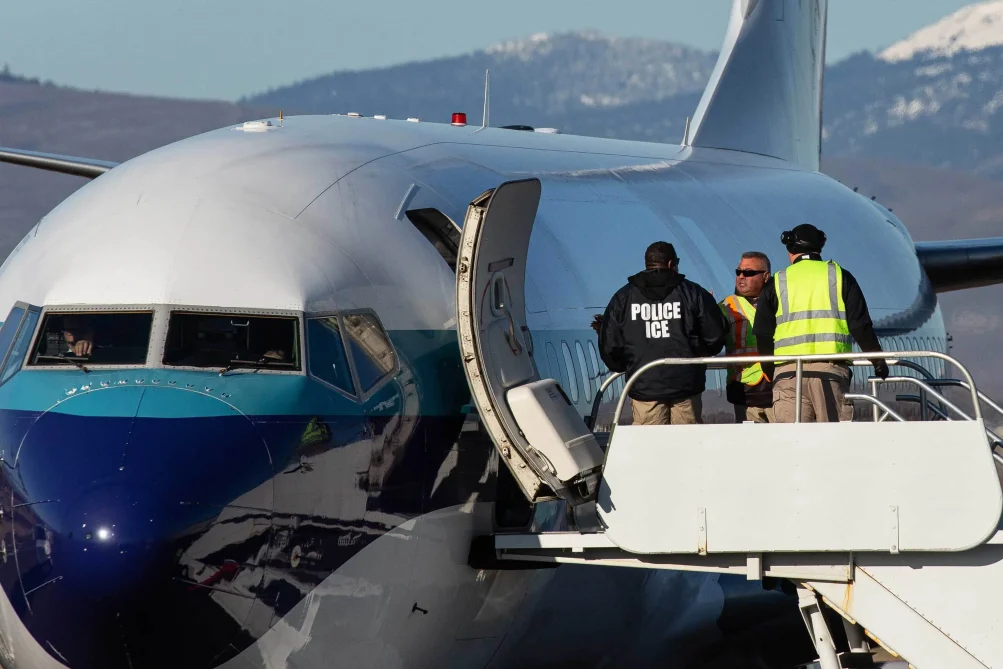
CameroonOnline.OG | In a startling breach of judicial protocol, reports have emerged detailing a “secret” deportation flight that has left legal experts and human rights advocates reeling. According to reports from the New York Times and Reuters, the Trump administration deported nine individuals to Cameroon on January 14—despite many holding active U.S. court protections and none of them hailing from that African nation.
The details of the operation, which originated from Alexandria, Louisiana, paint a harrowing picture of a breakdown in immigration due process.
Handcuffs, Chains, and Confusion
According to government documents and attorney testimonies, the deportees were kept in the dark about their fate until the very last moment. The experience of those on board was defined by a total lack of transparency and physical coercion:
-
Unknown Destinations: Many individuals did not know where they were being sent until they were physically boarded onto the Department of Homeland Security (DHS) aircraft.
-
Physical Restraint: Reports indicate the deportees were placed in handcuffs and chains for the duration of the long-haul flight.
-
Zero National Connection: Perhaps most baffling is the revelation that none of the nine individuals are citizens of Cameroon, raising massive questions about the legality of sending foreign nationals to a country where they have no citizenship or ties.
A Legal and Diplomatic “Black Hole”
Typically, deportation requires a formal agreement between the U.S. and the receiving nation. However, there is no public record of a deal where Cameroon has agreed to accept “third-party” deportees from other nations. This suggests a significant shift in policy executed away from public or congressional oversight.
As of this weekend, the DHS, the State Department, and Cameroon’s Ministry of External Affairs have remained silent, failing to respond to requests for comment.
“This isn’t just a breakdown of policy; it’s a disregard for the judicial branch,” says one legal advocate familiar with the cases. “When a court issues a stay of removal, that person is legally allowed to remain until their case is heard. To put them on a plane in chains is a direct defiance of that protection.”
What Happens Next?
The legal community is now scrambling to locate the nine deportees in Cameroon—a task made difficult by the fact that they have no roots in the country and may be facing immediate detention or displacement upon arrival.
The silence from the administration suggests a “wait and see” approach, but with court orders allegedly ignored, this story is likely headed back to the very courtrooms the administration bypassed.