
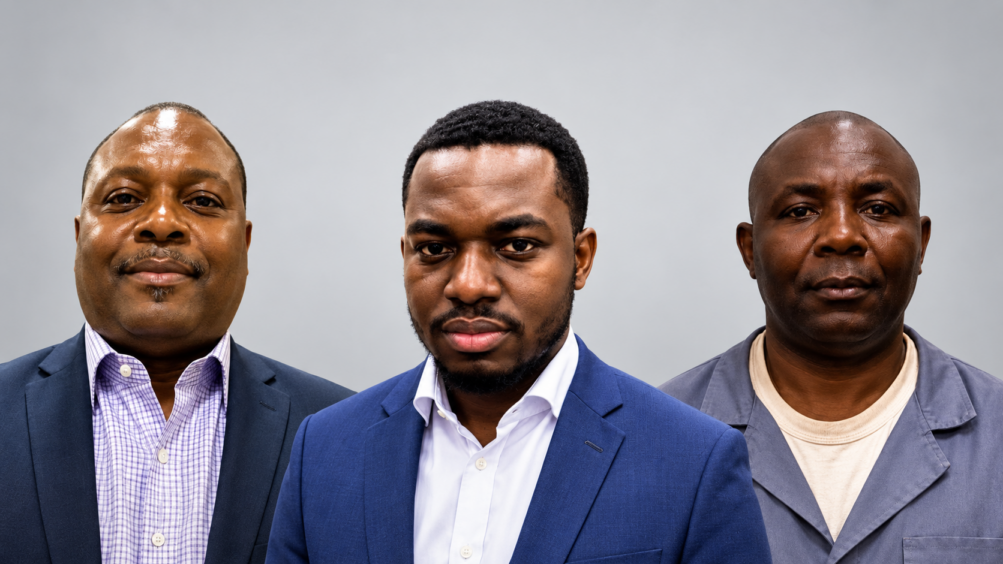
CAMEROONONLINE.ORG | A United States federal court in Missouri has handed down prison sentences ranging from five to fifteen years to three men of Cameroonian origin for their roles in financing armed separatist fighters, procuring explosives, and facilitating kidnappings in Cameroon’s North West Region.
The sentences, delivered in the U.S. District Court for the Western District of Missouri, conclude a federal investigation into cross-border financial and operational networks supporting armed violence in Cameroon’s Anglophone crisis.
The Verdicts and Sentences
-
Francis Chenyi Sr. (52, Saint Paul, Minnesota): Sentenced to 180 months (15 years) in federal prison, followed by three years of supervised release. Chenyi was convicted by a federal jury of conspiracy to provide material support to kill, kidnap, and maim in a foreign country; conspiracy to use weapons of mass destruction (WMDs) abroad; international money laundering; and providing material support for WMD use.
-
Lah Nestor Langmi (49, Buffalo, New York): Sentenced to 180 months (15 years) in federal prison and three years of supervised release. He was convicted alongside Chenyi on charges of conspiracy to provide material support for killings, kidnappings, and maiming, as well as international money laundering.
-
Claude Ngenevu Chi (43, Kansas City, Missouri): Sentenced to 63 months (5 years and 3 months) in prison and three years of supervised release. Chi had previously entered a guilty plea to one count of conspiring to provide material support and resources for the use of weapons of mass destruction abroad.
Evidence Presented in Court
Prosecutors presented evidence detailing the defendants’ coordination with armed groups on the ground through digital communications and peer-to-peer fund transfers:
-
Manufacture and Deployment of IEDs: The defendants coordinated the acquisition, financing, and assembly of improvised explosive devices (IEDs) and rocket-propelled grenades (RPGs). In late 2020, funds were specifically raised and transferred to manufacture explosives aimed at enforcing separatist “ghost town” lockdowns during Cameroon’s regional council elections. Chenyi also facilitated technical training for fighters handling explosive devices.
-
High-Profile Abductions: Court evidence showed Langmi sent an audio directive instructing fighters in the North West Region to intercept and abduct a traditional leader. The incident resulted in the November 2020 kidnapping of the Fon of Nso and the late Cardinal Christian Tumi. Evidence indicated Chenyi drafted interrogation questions to be posed to the captives and approved peer-to-peer funds to sustain the operation, while also handling ransom arrangements in separate abduction incidents.
-
Financial Mechanisms: Funds were solicited within diaspora circles in the U.S. and moved to recipients in Cameroon via mobile money applications and informal peer-to-peer financial channels to evade standard banking oversight.
Implications for the Diaspora and the Conflict
For Cameroonians both at home and abroad, this ruling marks a notable precedent in the legal exposure of diaspora members directing or financing violence from abroad.
While diplomatic partners have frequently called for dialogue to resolve the crisis in the North West and South West regions, U.S. law enforcement has increasingly applied federal neutrality, anti-terrorism, and money laundering laws against actors leveraging American financial and communications infrastructure to support overseas combat operations. The outcome signals heightened regulatory and criminal scrutiny on cross-border political remittances directly linked to armed groups.