 CameroonOnline.org Cameroon news, Actualité Camerounaise, live Web TV & Radio, World News and a lot more
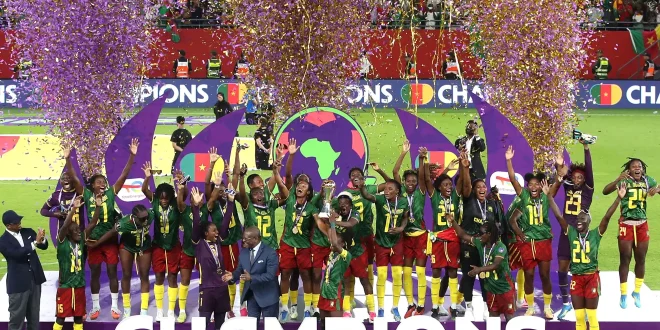
CAMEROONONLINE.ORG | From a team that did not originally qualify for the tournament to champions of Africa: Cameroon’s Indomitable Lionesses have completed one of the most extraordinary redemption stories in the history of African women’s football.
On Sunday, August 16, 2026, at the Moulay El Hassan Stadium in Rabat, Morocco, Cameroon finally reached the summit.
The Indomitable Lionesses defeated Malawi 3-0 in the final of the TotalEnergies CAF Women’s Africa Cup of Nations Morocco 2026, lifting the continental trophy for the first time in the country’s history. Marie Ngah Manga struck twice, while Naomi Ndjoah Eto scored the other goal as Cameroon produced a devastating first-half performance that effectively decided the final before the break.
For generations of Cameroonians who had watched the Lionesses come painfully close, this was more than another football victory.
It was redemption.
It was vindication.
And, finally, it was history.
The long wait is over
Before 2026, Cameroon had reached three WAFCON finals — in 2004, 2014 and 2016 — and lost all three to Nigeria. Remarkably, the Lionesses had not managed to score in any of those finals.
That history made what happened in Rabat even sweeter.
Cameroon did not simply win their fourth final. They dominated it.
Ngah Manga opened the scoring in the 20th minute. Ten minutes later, Myriam Nyadjou created the opportunity for Naomi Ndjoah Eto to make it 2-0. Then, in first-half stoppage time, Ndjoah Eto turned provider for Ngah, who completed her brace and sent Cameroon into the dressing room 3-0 ahead.
There would be no comeback for Malawi.
There would be no fourth heartbreak for Cameroon.
When the final whistle sounded, the Indomitable Lionesses became the fourth nation to win the Women’s Africa Cup of Nations, joining Nigeria, Equatorial Guinea and South Africa. Cameroon also became only the third African country, after Nigeria and South Africa, to have won both the men’s Africa Cup of Nations and the Women’s Africa Cup of Nations.
For a country that lives and breathes football, that is a special place in African sporting history.
From a second chance to African champions
Perhaps the most remarkable part of Cameroon’s triumph is how unlikely the journey looked only months earlier.
The Lionesses had failed to qualify for the tournament through the original qualification process. But when WAFCON was expanded to 16 teams, Cameroon was among four nations added to the field based on FIFA ranking.
They were handed a second chance.
They transformed it into a trophy.
Cameroon began their campaign by defeating Mali 2-1, then beat Ghana 1-0, becoming the first team to secure qualification for the knockout rounds after just two group matches. A draw against Cape Verde completed a group stage in which Cameroon finished top of Group D with seven points.
Then came the real tests.
In the quarter-final, Cameroon faced defending champions and record 10-time winners Nigeria.
The Lionesses won 1-0.
In the semi-final they faced hosts Morocco, backed by their home supporters. After 120 goalless minutes, Cameroon prevailed 3-1 in the penalty shoot-out.
And in the final, Malawi were swept aside 3-0.
The statistic that captures Cameroon’s knockout campaign best is astonishing:
Nigeria: 0 goals against Cameroon.
Morocco: 0.
Malawi: 0.
The Indomitable Lionesses did not concede a single goal throughout the knockout rounds.
That is championship football.
Marie Ngah Manga: the woman for the big occasion
Finals create heroes, and Marie Ngah Manga ensured that her name will forever be linked with August 16, 2026.
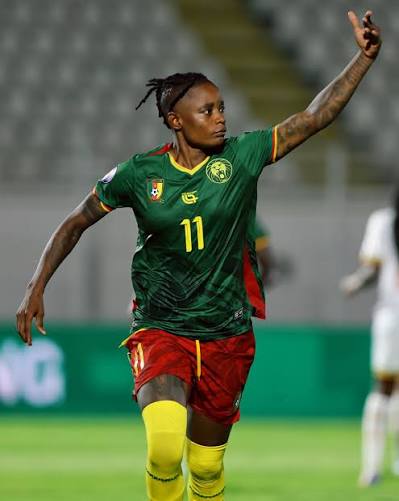
She scored Cameroon’s historic opening goal in the 20th minute and returned in first-half stoppage time to score the third.
Two goals in a continental final.
Two goals to bury decades of frustration.
Two goals to help deliver Cameroon’s first WAFCON trophy.
Her performance earned her the Player of the Final award.
She had already shown her scoring instincts during the group stage, and when Cameroon needed someone to seize the biggest match in the history of its women’s national team, Ngah Manga delivered.
Naomi Ndjoah Eto: a goal and an assist when it mattered most
The scoreline may place Ngah Manga at the centre of the final, but Naomi Ndjoah Eto’s contribution was
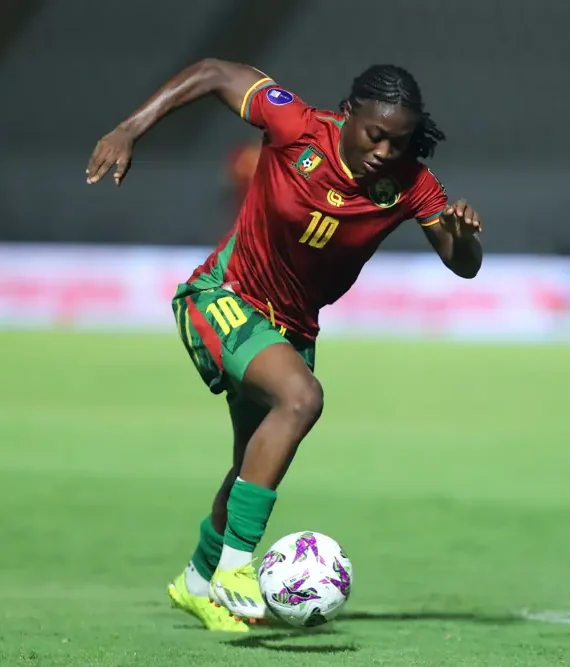
equally decisive.
She scored Cameroon’s second goal after 30 minutes, before creating Ngah’s second strike in the 45+3rd minute.
A goal and an assist in a WAFCON final is the kind of performance remembered long after medals have been placed around necks.
Cameroon entered half-time three goals ahead largely because Ngah Manga and Ndjoah Eto had been devastatingly efficient when their opportunities arrived.
Monique Ngock: Africa’s best player at WAFCON 2026
If Ngah Manga owned the final, Monique Ngock helped own the tournament.
The 21-year-old midfielder was named Player of the Tournament, recognition of a campaign in which she became the heartbeat of Cameroon’s midfield.
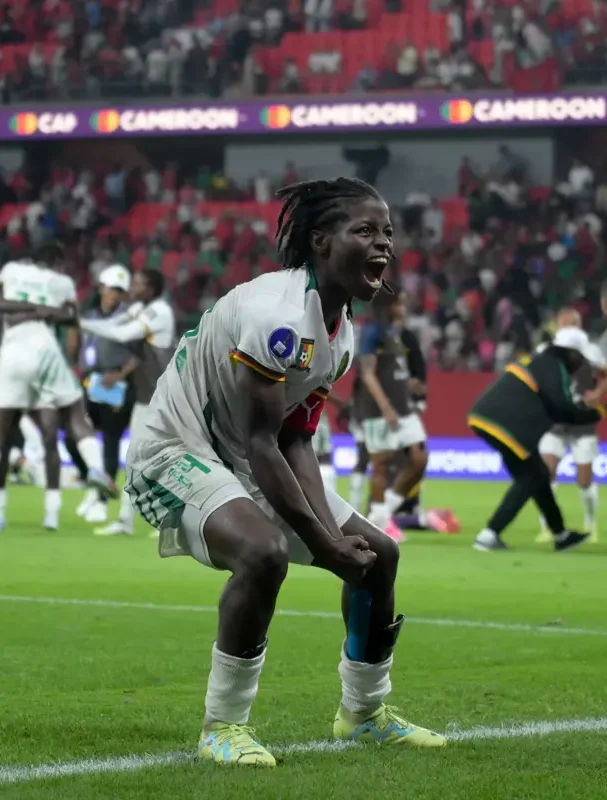
Ngock’s story also gives this triumph an emotional dimension.
She was just 12 when Cameroon lost the 2016 final to Nigeria in Yaoundé. She later recalled crying after that defeat, at a period when her own passion for football was not receiving the family support she wanted.
Ten years later, she was no longer a child watching the Lionesses chase history.
She was one of the women making it.
Throughout WAFCON 2026, Ngock provided control in midfield, competed for duels, dictated tempo and helped transform possession into attack. Against Morocco, she was entrusted with the captain’s armband after Colette Ndzana was substituted — another indication of how rapidly her influence within the team has grown.
Her journey from watching the heartbreak of 2016 to being crowned the outstanding player of Cameroon’s first championship campaign is one of the defining stories of this WAFCON.
And her message extends beyond football.
Ngock spoke before the final about wanting young Cameroonian girls to look at the Lionesses and believe they, too, could one day stand where these players now stand.
After this triumph, that dream has become easier to imagine.
Michaely Bihina: the wall behind Cameroon’s crown
Championship teams need goalkeepers who can change matches.
Cameroon had Michaely Bihina.
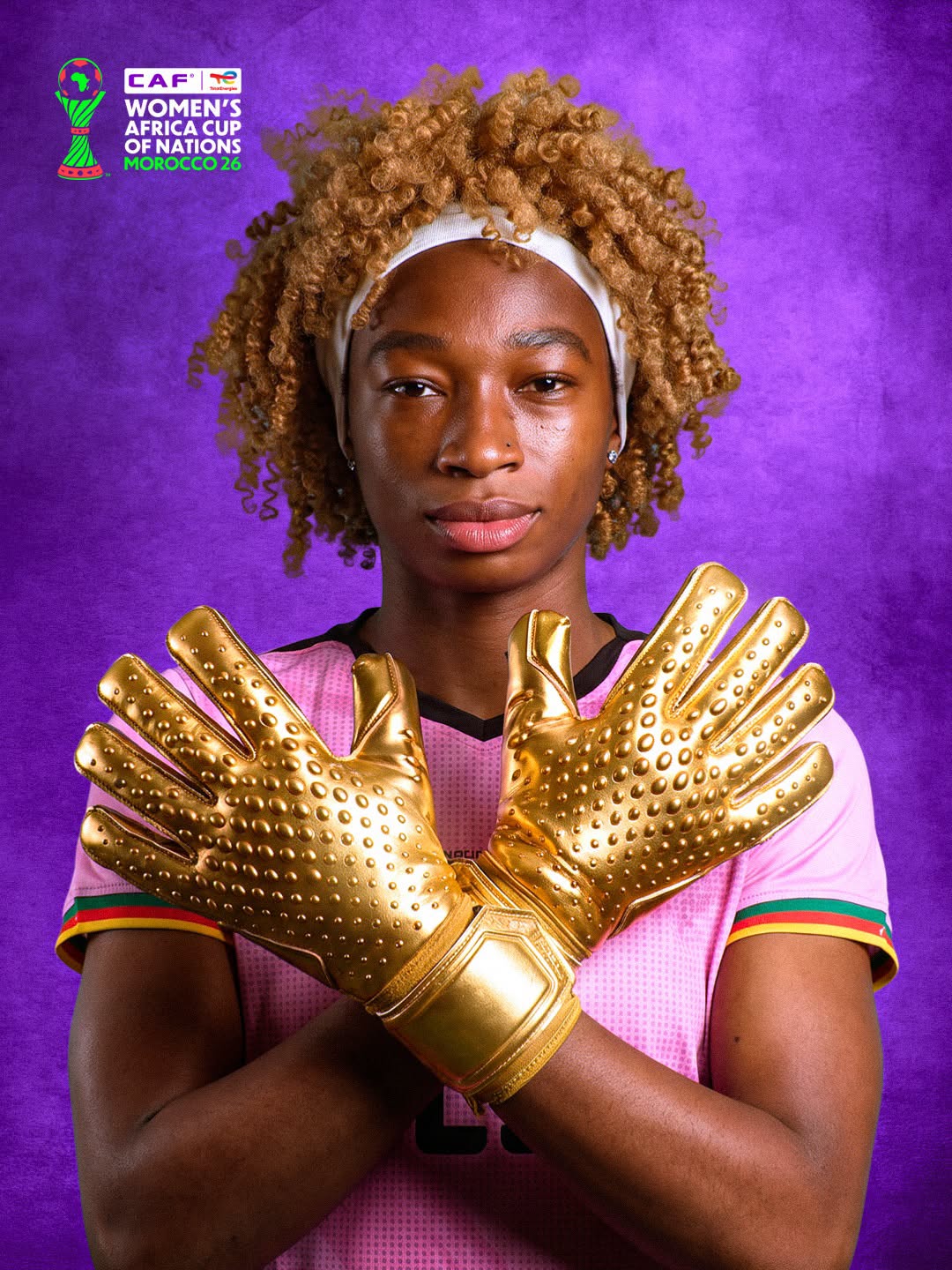
The 22-year-old was named the tournament’s Golden Glove winner after a spectacular campaign in goal.
Her defining moments arrived during the knockout stages.
Against Nigeria in the quarter-final, Bihina produced nine saves as Cameroon defeated the defending champions 1-0.
Against Morocco in the semi-final, she made another three saves during 120 minutes before becoming the central figure in the penalty shoot-out, stopping three Moroccan penalties as Cameroon won 3-1. She became the first Cameroonian goalkeeper to save three penalties in a WAFCON shoot-out.
Across the quarter-final and semi-final alone, she made 12 saves without conceding a goal and was named Woman of the Match in both games.
Then came one final act.
Another clean sheet.
Malawi 0, Cameroon 3.
Golden Glove secured. African title secured.
Bihina was not merely protecting Cameroon’s goal. At crucial moments, she protected the country’s dream.
The awards confirm Cameroon’s dominance
Cameroon did not leave Morocco with only the trophy.
The individual honours showed just how influential the Lionesses’ stars had been throughout the competition.
WAFCON 2026 major awards included:
- Champions: Cameroon
- Player of the Tournament: Monique Ngock — Cameroon
- Best Goalkeeper/Golden Glove: Michaely Bihina — Cameroon
- Player of the Final: Marie Ngah Manga — Cameroon
- Top Scorer: Temwa Chawinga — Malawi
- Fair Play Award: Algeria
Three of the tournament’s most significant individual distinctions therefore went to Cameroonian players.
It was not simply a championship won by one moment of inspiration. It was a tournament in which Cameroon produced elite performers in goal, midfield and attack.
$2 million for the champions
The victory also brings a record financial reward.
CAF announced before the tournament that the 2026 WAFCON champions would receive US$2 million, double the $1 million winners’ prize at the previous edition.
CAF increased the entire tournament prize pool by 67%, from $3.475 million to $5.8 million. The runners-up receive $750,000, while every one of the 16 participating national teams was guaranteed $150,000 in participation funding. CAF also announced that the third-place prize had been increased by 43%.
For Cameroon, therefore, the trophy comes with a $2 million champions’ prize.
But the value of this triumph cannot be measured only in dollars.
It is an investment opportunity for women’s football in Cameroon: stronger development structures, improved preparation, better conditions for players and coaches, and greater encouragement for the thousands of girls who now have African champions wearing the green, red and yellow to admire.
Brazil 2027 awaits
Cameroon’s WAFCON run also secured another major prize: qualification for the 2027 FIFA Women’s World Cup in Brazil.
Under the 2026 format, all four WAFCON semi-finalists qualified directly for the World Cup. By reaching the last four, Cameroon booked their place alongside the other semi-finalists.
So the Lionesses leave Morocco as champions of Africa and with their return to the global stage confirmed.
That changes the next conversation.
Cameroon will not go to Brazil simply hoping to participate. This team has now beaten Ghana, dethroned Nigeria, survived host nation Morocco and shut out free-scoring Malawi in a continental final.
Africa’s champions will arrive with expectations.
Valentine Nguele deserves her flowers
Amid all the celebrations for the players, a special word must be reserved for head coach Valentine Nguele.
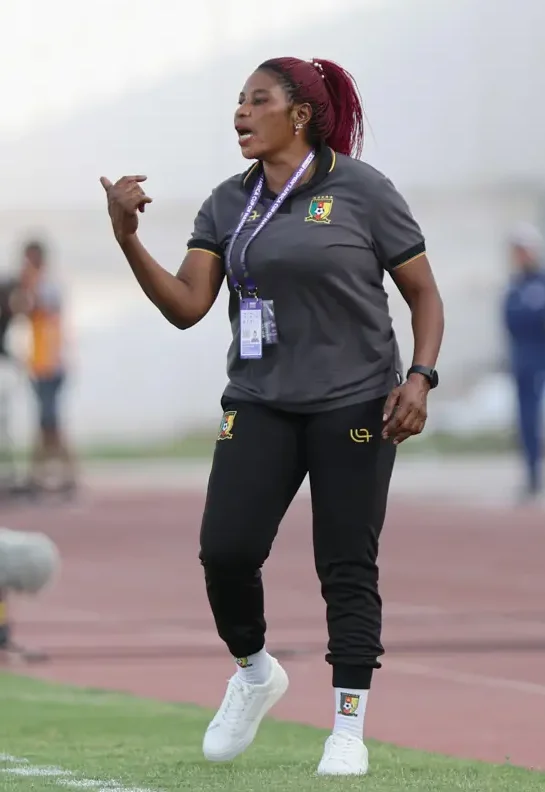
Her achievement is extraordinary.
Nguele had been appointed only about two months before the tournament, yet quickly established a team defined by discipline, tactical organisation, unity and an impressive blend of experienced internationals and emerging stars.
She embraced Cameroon’s underdog status instead of allowing expectations to suffocate the team.
Against Nigeria, Cameroon were organised enough to protect a one-goal lead against the continent’s most decorated women’s national team.
Against Morocco, Nguele and her staff navigated 120 minutes against the hosts before their players held their nerve in the shoot-out.
And against Malawi — a side that entered the final as the tournament’s leading scorers — Cameroon struck three times before half-time and then managed the game professionally to preserve another clean sheet.
Nguele knew what representing Cameroon meant long before she became national-team coach. She represented the country internationally between 2000 and 2010, competed at the 2006 WAFCON, and began coaching soon after ending her playing career. She progressively earned her CAF coaching qualifications, culminating in a CAF A Licence in 2023, while accumulating years of experience in Cameroonian women’s football.
In Morocco, those years of work came together.
From former international to national-team coach.
From the disappointment of previous generations to the woman on the touchline when Cameroon finally conquered Africa.
Valentine Nguele did not inherit an easy situation.
She created belief from uncertainty, organisation from pressure and champions from a team that had been given a second chance.
Coach, chapeau.
A victory bigger than one night
The 2026 final itself was already part of a new era for African women’s football. CAF said it was being carried live in more than 85 countries, including expanded coverage in Europe and other global territories, while Cameroonians could follow through broadcasters including CRTV, Canal 2 and MSI.
Millions therefore had the opportunity to see what Cameroon has known for generations:
When the lion is truly awake, it is difficult to stop.
This triumph belongs to Ngah Manga and her goals.
It belongs to Bihina and her saves.
It belongs to Ngock and her mastery of midfield.
It belongs to Ndjoah Eto, Nyadjou, Aboudi Onguéné and every player who ran, tackled, sacrificed and believed.
It belongs to Valentine Nguele and her technical staff.
And it belongs to Cameroonians — from Yaoundé to Douala, Bafoussam to Bamenda, Garoua to Buea, Bertoua to Maroua, and across the diaspora — who have waited years to see the Indomitable Lionesses finally stand on top of Africa.
Ten years after the heartbreak of the 2016 final on home soil, the story has been rewritten.
Cameroon are no longer the nearly women of African football.
They are African champions.
They are World Cup-bound.
They are the Queens of Africa.
Cameroon 3-0 Malawi.
WAFCON Champions, 2026.
History made.
?? Bravo, Lionnes Indomptables. Le Cameroun est champion d’Afrique!