 CameroonOnline.org Cameroon news, Actualité Camerounaise, live Web TV & Radio, World News and a lot more
Related Articles



CameroonOnline.ORG | The development trajectory of Central Africa is undergoing a notable transformation, with Cameroon emerging as a key focal point. At the center of this shift is a rapidly strengthening relationship with China, one that is evolving beyond traditional infrastructure financing into a broader, more strategic partnership.
This renewed commitment was underscored during a high-level meeting held in Yaoundé on March 24, 2026, alongside the World Trade Organization’s 14th Ministerial Conference. Both countries reaffirmed their dedication to a Comprehensive Strategic Partnership, signaling a transition toward deeper economic integration and long-term value creation.
Expanding the Foundations of Cooperation
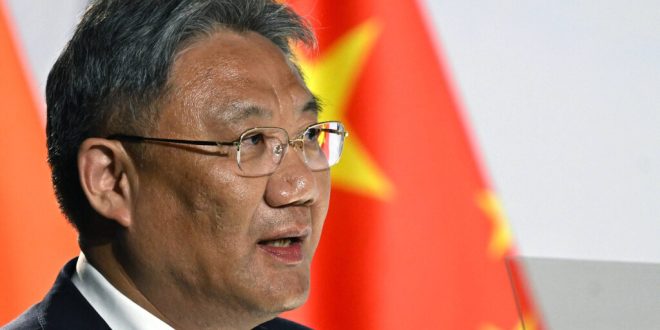
China’s Commerce Minister, Wang Wentao, outlined three priority areas that will shape the next phase of collaboration.
Infrastructure development remains a cornerstone. Building on flagship projects such as the Kribi deep-sea port and the Memve’ele hydroelectric dam, future efforts will focus on improving transport corridors and strengthening regional connectivity.
Energy cooperation is also gaining momentum. China is positioning itself as a central partner in stabilizing Cameroon’s energy supply, with investments spanning both conventional power generation and renewable energy solutions to support industrial growth.
Agriculture, however, represents one of the most significant shifts in strategy. Rather than continuing a model based primarily on raw exports, the partnership is increasingly focused on value addition. This includes agro-processing, technology transfer, and the development of local industries that can capture more economic value within Cameroon.
From Aid to Strategic Investment
The relationship between the two countries is clearly maturing. China remains Cameroon’s largest trading partner, accounting for more than one-fifth of its imports and playing a major role in its oil and gas exports. However, the emphasis is now shifting toward sustainability, diversification, and mutual economic resilience.
Recent diplomatic messages from President Xi Jinping highlighted the importance of advancing bilateral cooperation in ways that help Cameroon broaden its economic base. This reflects a broader recalibration from infrastructure-led engagement to more balanced and strategic investment.
Strategic Timing and Global Context
This deepening partnership comes at a pivotal moment. By hosting the WTO Ministerial Conference, Cameroon is positioning itself as a growing hub for trade and economic dialogue in Africa.
Alignment with China’s Belt and Road Initiative further strengthens this positioning. Cameroon aims to leverage this partnership to reduce its trade deficit, expand domestic manufacturing, modernize public institutions, and enhance its role within the African Continental Free Trade Area.
Looking Ahead
The year 2026 has been designated as the China-Africa Year of People-to-People Exchanges, suggesting that the relationship will extend well beyond infrastructure and trade. Increased collaboration in education, vocational training, and sustainable energy is expected to play a central role in the next phase.
For Cameroon, the long-term objective is clear. By harnessing its natural resources and aligning with strategic global partners, it seeks to transform its economic potential into sustained and inclusive development.
The evolving partnership with China may well prove to be a defining factor in achieving that vision.