 CameroonOnline.org Cameroon news, Actualité Camerounaise, live Web TV & Radio, World News and a lot more
Related Articles

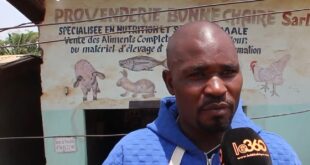

CAMEROONONLINE.ORG | Young Cameroonians allegedly lured to Russia with promises of employment are ending up on the battlefields of Ukraine. Their desperate families are now demanding answers, justice, and their safe return.
Families Take Their Anger and Desperation to the Russian Embassy
For many young Cameroonians, leaving home in search of employment abroad represents a chance to escape economic hardship and build a better future. But for some who traveled to Russia expecting legitimate jobs, that dream has reportedly turned into a nightmare.
Instead of earning a living and supporting their families back home, these young men allegedly found themselves recruited into the Russian military and deployed to the dangerous front lines of the war in Ukraine.
On Wednesday, October 28, 2026, relatives of affected Cameroonians took their demands to the streets of Yaoundé.
Under the banner of “Bring Back Our Sons and Brothers”, a collective of concerned families organized a peaceful march to the Russian embassy, calling for urgent intervention by both the Cameroonian and Russian governments.
Their demands were straightforward: identify and dismantle clandestine recruitment networks, establish the whereabouts of missing relatives, and facilitate the safe return of Cameroonians caught up in the conflict.
Promised Employment, Sent to War
At the center of the controversy are allegations of deceptive recruitment practices targeting young Africans seeking economic opportunities abroad.
According to accounts from affected families and investigative reports, some recruits were attracted by promises of well-paying civilian employment in Russia.
However, after arriving, they reportedly found themselves pressured or deceived into signing military contracts, receiving limited training, and being dispatched to the Ukrainian battlefield.
Not every African recruited into the Russian military joined under false pretenses. Investigations indicate that some enlisted voluntarily, while others were allegedly misled about the nature of their employment or pressured into military service.
For those who were deceived, the consequences have been devastating.
Their families, who expected occasional phone calls and financial support from relatives working abroad, are instead facing prolonged silence, uncertainty, and the terrifying possibility that their loved ones may never return.
Cameroon Among the Hardest-Hit African Countries
The situation extends far beyond Cameroon.
According to findings published by the investigative collective All Eyes on Wagner, at least 1,417 African nationals from 35 countries were identified as having been recruited into the Russian military between 2023 and mid-2025.
Of those identified, 316 combat deaths were documented, suggesting that more than one in five recruits in the investigated group had died.
Cameroon features prominently in these findings.
The investigation identified 335 Cameroonian recruits and 94 confirmed deaths, making Cameroon the country with the highest documented death toll among the African nationalities examined.
These figures represent documented cases rather than a complete count of African nationals involved in the conflict. The actual numbers may be higher.
For Cameroonian families, however, the statistics are much more than numbers. Behind each case is a son, husband, brother, or father whose absence has left loved ones struggling for answers.
Families Demand Answers About Missing Relatives
The anguish expressed during the Yaoundé demonstration illustrates the human cost of these recruitment networks.
Some relatives have reportedly gone months without receiving any information about the fate of their loved ones.
One woman participating in the campaign said she had not heard from her husband for nine months. Others are demanding official confirmation of whether their relatives are alive, injured, detained, or dead.
The uncertainty can be especially painful for families who cannot even begin mourning because they have received no reliable information about what happened.
For the protesters, obtaining information is therefore just as urgent as securing repatriation.
They want both governments to cooperate in identifying Cameroonians who have been recruited, communicating with their families, and arranging their return wherever possible.
South Africa Offers a Possible Path Forward
Despite the uncertainty surrounding the Cameroonian recruits, developments involving South African nationals offer some hope.
In February 2026, South African authorities announced that diplomatic engagement with Russia had secured the release of 17 South African men who had reportedly been lured into military involvement in Ukraine.
On February 26, the South African government confirmed that 15 had returned home, while two remained in Russia pending medical or travel arrangements.
The case demonstrated that diplomatic intervention could help secure the release and repatriation of foreign nationals caught up in the conflict.
Cameroonian families are now calling for a similar effort from their government.
They hope that direct negotiations between Yaoundé and Moscow could help identify those still alive, secure their release from military obligations, and arrange their safe return.
A Growing Call for Government Accountability
Beyond the immediate demand for repatriation, the demonstrations raise broader questions about human trafficking, international recruitment practices, and the protection of vulnerable young people.
How are recruiters able to approach potential victims? What measures are being taken to investigate deceptive employment offers? And what assistance is available to families whose relatives have disappeared after traveling abroad?
For the Cameroonian authorities, the challenge extends beyond diplomatic engagement with Russia. It also involves investigating suspected recruitment networks, improving public awareness of fraudulent overseas employment opportunities, and establishing clear channels through which affected families can seek assistance.
For Russia, the demands include greater transparency about the status of Cameroonian nationals serving in its armed forces and cooperation in resolving cases involving alleged deception or coercion.
Behind Every Statistic Is a Family Waiting for Answers
For the families who marched in Yaoundé, the Russia-Ukraine war is no longer a distant international conflict.
It is a painful reality unfolding in their own homes.
What began as a journey toward economic opportunity has, in some cases, ended in prolonged separation, uncertainty, and death.
The peaceful demonstration organized by “Bring Back Our Sons and Brothers” is ultimately a plea for accountability and human dignity.
These families are not asking for political victories or military gains. They are asking for their sons, brothers, and husbands to come home.
And for those whose loved ones will never return, they are demanding something equally fundamental: the truth about what happened to them.
